Saturn & Aquarius (and a few other pieces, too)
This deep dive was sparked by something said by astrologer Michelle Corbesier some months ago in an IG reel that I haven’t been able to get out of my head since.
WHY is Aquarius associated with groups when its domicile lord, Saturn, is associated with loneliness, isolation, and abandonment?
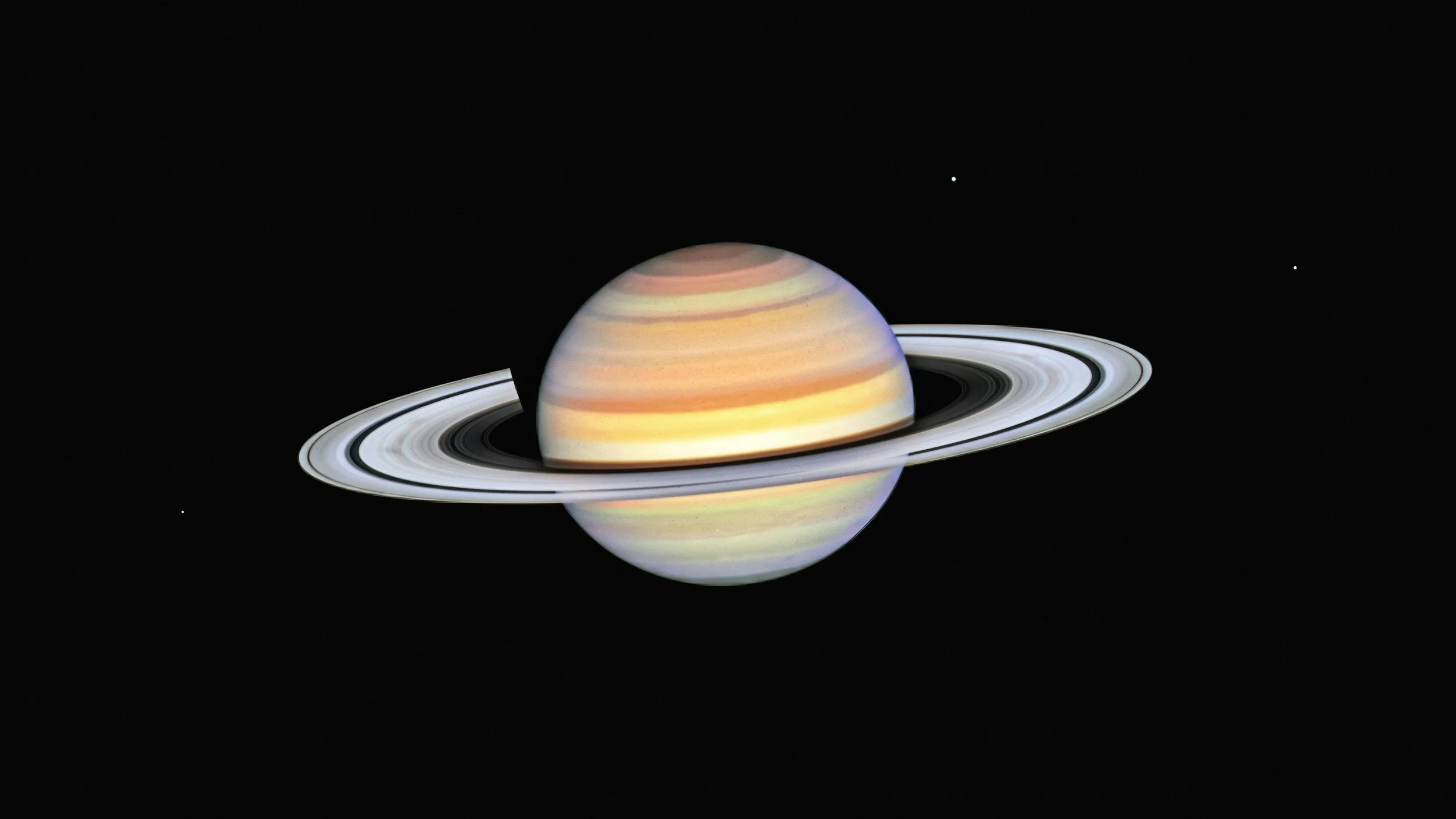
Why do so many astrologers say that Aquarius is about “community” and “the collective” when Saturn is anything but “community” and “the collective”?
I think this misunderstanding partly descends from the alphabet house system that conflated Aquarius with the Western astrological understanding of the 11H as speaking to friends/groups/networks/supporters, etc
But let’s break down why Aquarius IS NOT about “the collective”—because such thinking belies other, deeper truths about this sign, and this is important background—certainly to a conversation I hope to have with Natty at some point next week on my YouTube channel—about the lunar nodes and what they might mean in the Leo-Aquarius axis.
So first point: I tend to look at sign polarities a little bit like Yin-Yang symbols—In-Yo in Japanese—in that each sign will have a small circle of the other sign’s qualities/attributes/tendencies inside it. So to understand Aquarius, we really have to look at Leo first.
And before I go there (I know—my Mercury in Pisces brain can be all over the place sometimes!), I want to look at aspects and elemental properties—because this will be relevant to the discussion.
Many traditional astrologers will have heard of sextiles being of the nature of Venus, squares being of the nature of Mars, trines being of the nature of Jupiter, and oppositions being of the nature of Saturn.
But what about conjunctions? One thing that has always bugged me is how we are told that conjunctions are there own special thing, but nobody goes beyond that (or at least, no-one I’ve read thus far anyway).
So my take is that conjunctions belong to the Sun and Moon since it is their joining together that marks the OG conjunction.
I have heard conjunctions described in a few different ways. Generally, it is seen as the blending of 2 different planetary energies into 1. Another way of describing that I once read about (I think it might be have been from Clare Martin) is imagine a stage where the stage-manager places a bit of tape for where the performers/planets are meant to stand. Because 2 places are not marked out, the performers/planets jostle to stand in the exact spot. The astrologer Alejo Lopez thought this was a more likely scenario when there are more than 2 planets involved.
Some refer to the conjunction as the conuinctio—the marriage—and certainly the Sun and the Moon resetting their synodic cycle each month can be seen as such. But I also think of planets cazimi—in the heart of the Sun—and how this is seen as an alchemical transformation and rebirth. And they are largely invisible as the alchemical process is largely an invisible one.
Except of course in the case of eclipses—particularly solar eclipses…They are, after all, quite simply a new moon that is VISIBLE.
And if sextiles are warm and moist/wet, squares are hot and dry, trines are hot and wet, and oppositions are cold and dry, then what is the conjunction? Is it hot/dry/cold/wet all at once? Food for thought…
But I digress. Leo derives its qualities from the Sun. Although the Sun is life-giving, it is hot and dry, so this ultimately gives it a slightly malefic quality. As Dr Ali Olomi says, power is inherently corrupting and so needs guard-rails.
And really, life on Earth would not be the case without the other planets’ playing their roles (meteorite grabber, situating Earth in the Goldilocks Zone, etc), but PARTICULARLY THE MOON!
And astrologically, the Moon is the translator of light. The Sun’s light can only make the Earth fecund IN TANDEM with the Moon and the Moon’s connection to water.
So the luminaries really are a double-act team. I find it fascinating that in the Western tradition, such an emphasis is laid on the Sun, while in the Eastern tradition, it’s the Moon that is highlighted. To my mind, you need both.
Which brings us back to Leo. The Sun’s rays are cast outward and are essentially mono-directional. Just as the Sun is the centre of our solar system, so too is the human ego as part of the Sun’s symbolism, the piece that inclines individuals to centre themselves.
But just as the Sun needs the Moon to translate the one to the many in order to understand/experience itself (part of the creation myth found in India), so, too, does the human ego desire an audience to help define itself (only in Libra, this is taken a step too far, and so the Sun is in its fall in that sign).
The Sun as human ego is most magnificently itself when it can fertilise hearts and minds by simply being itself. So this is where courage (speaking one’s heart etymologically) and authenticity come into play, and why Leo is often spoken of as creative self-expression. The astrologer Darby Costello on an Astrology Podcast episode likened Leo to the camp-fire at night: too high and the faces of all around the fire are blotted out, too low and the faces around are all in shadow. But at just the right height, the faces around the fire are all illuminated, and this is the essence of Leo in its most positive expression.
Now how is this “opposite” of Aquarius? I think the thing too many astrologers miss is that Leo is more about the individual vis-a-vis the individual in its most positive expression. It’s about the individual swimming their own race, and not that of anyone else.
Aquarius, on the other hand, is about the individual vis-a-vis others (and now we have a further clue about Saturn being exalted in Libra!).
Aquarius as represented by Saturn symbolises the social awareness of status and hierarchy. Saturn quite literally represents judges and judgement—and this will translate into a constant jockeying around WHO has power and HOW it is held.
In ancient Babylonian astrology, Aquarius is associated with the constellation of ‘the Great One’ or ‘Mul Gula’.
Gavin White in his wonderful book, “Babylonian Star Lore” writes:
“Like many of the constellations that embody watery symbolism, the Great One is closely associated with the god of wisdom and water, known as Enki in Summerian and Ea in Akkadian. One astrology text simply states that ‘the Great One is the Lord of springs, Ea’. In ancient art, Enki is frequently depicted with overflowing vases in his hands or around his throne dais.” (p. 124)
So now we encounter the image of water in its association with Aquarius. White further writes, “In an agricultural context, [the Great One] can also be understood as the ‘irrigator’ whose waters irrigate the thriving barley fields in late winter.” This speaks directly to the symbolism of Saturn as the farmer—tending to his crops and watering them.
This also brings to mind Ganymede, kidnapped by Zeus to serve as cup-bearer to the gods on Mount Olympus. This is Saturn as the servant.
And we often read descriptions from various Hellenistic astrologers that give Saturn as significations for ship ownership/sailing/nautical adventures (Vettius Valens), waterside jobs/mariners (Paulus Alexandrinus), navigation/maritime disasters (Claudius Ptolemy), and harm from sea and water/nautical death (Dorotheus of Sidon).
But how do we reconcile all this water with the cold & dry nature of Saturn, and the fixedness and airiness of Aquarius as a sign?
Whilst all the signs can describe how we process experiences, Water as an element can be said to speak to the emotional impact of an experience as a data point. In Gemini, we are asked to gather data points and connect them. In Libra, we are asked to have conversation around them. And in Aquarius, we find that fixed air fuses with Saturn’s coldness and dryness to create the compulsion t turn those data points into vision for how society could be/must be and make policies, and pronouncements (hear the small circle of Leo here?) on the architecture of society as a whole.
But the trap here is that we conflate this WITH society as a whole—and that is not the case. Saturn sits as the edge of the solar system that is most easily visible to the naked eye as the farthest planet out. In this way, Saturn is connected to boundaries, edges, and limitations. But Saturn’s “rays” are multidirectional by virtue of not being in the centre: one side ‘looks’ into the solar system, toward the Sun, and creates form and structures (slowly).
The other side looks beyond the solar system as the ancients knew it, and contemplates the cosmos. For me, the side of Saturn facing the Sun is Capricorn, modified by sharing rulership with Mars (Cap’s exaltation ruler) and the cardinal earthy nature of that sign.
The side of Saturn that stares out into the abyss is connected to the Aquarius side, the outsider, the one who wants “in” but also doesn’t quite want to give up its vantage point so high up from without (Mesopotamian cuneiform tablets show that Saturn was symbolised by the Eagle).
So the hermit—the wise old man in his hut on the mountain—can be the mystic. But insofar as there is social awareness and understanding of hierarchies (that is the native is NOT a hermit) there arises a quest for social status, or at least acceptance, albeit on the native’s own terms, if possible (note this is not always likely for the Aquarius native as a child, where conformity becomes a survival strategy and has to be de-commissioned bit by bit when the native gets older—my thanks to the astrologer Jess K/@pluto_alchemist for sharing her thoughts around this piece on Threads).
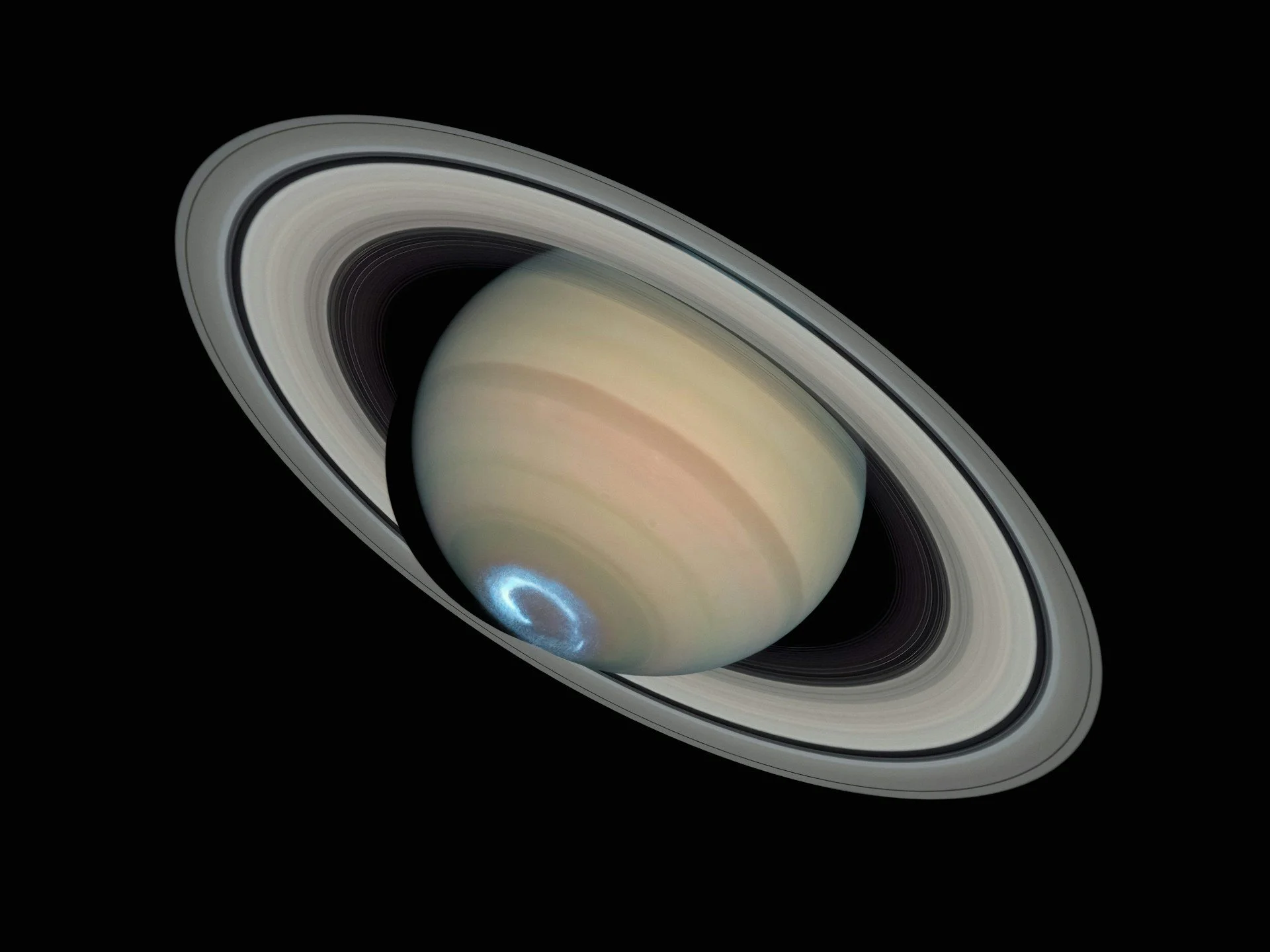
Before its signification were in some ways, co-opted by Uranus, Saturn included significations of resistance to authority and social and mass unrest. Granted that Saturn’s “rebellious” nature is secondary to its primary role as signifying being “oppressed by the great” (Valens, Book VI), but here we see the opposition to Leo.
Leo is connected to the king while Saturn is connected to the common man. But Saturn’s associations with the opposition enfold the paradox that is Saturn—that is Saturn is opposite of the sovereign and yet seeks sovereignty of self.
This is where I believe that archetypes of the ‘eccentric one’ and ‘the weirdo’ spring from. Leo may want to be adored, but Saturn in Aquarius simultaneously wants to fit in and and yet stand out. The social awareness leads to masking, to trying to fit in while also trying to keep the outside vantage point I described earlier. The astrologer Caroline Casey talks about how “the virtue of Aquarius is to know what everyone is thinking; the demon…is to know what everyone is thinking too much.” This can lead to becoming “constricted by an over concern about what other people think.”
In turn, I think this speaks to a hyper vigilance around individuality (speaking to the solitariness of Saturn) and once again the desire to fit in and stand out at the same time. This can also speak to the perfectionism that can exist in Aquarius, and this reminds me of how the astrologer Sam Reynolds describes this sign as “the winter Virgo”—I can see the overlap through the perfectionism that does indeed run through both signs.
And yet it is individual rights and the resistance to oppression that provides the ‘guardrails’ to power that the Sun in Leo describes. The Sun in Leo IS the king, the boss, the CEO. So we see how the 2 signs complement each other with respect to sovereignty, which I think is one of the themes central to this axis.
I do want to take a moment here and mention a fascinating article I came across a few years ago that refers to the Babylonian reference to Saturn as “the Sun of the night”. The astrologer Anthony Louis has a wonderful blog post/article on his thoughts regarding this symmetry that I won’t go into here, but that I do highly recommend you look up and find if this line of though interests you.
So this has already become quite long, and I think I will leave it here for now. I hope to further riff on this topic with regards to the lunar nodes in this sign axis next week, but wanted to lay a bit of groundwork here first.
My thanks to Michelle Corbesier for sparking this initial reflection on how talking about Aquarius as symbolic of “community” and “the collective” are misnomers that belie a deeper understanding of what this sign’s energy points to and constellates.. Such an understanding will then of course impact how we speak of the lunar nodes transiting through this sign—and this will be further impacted by whether we are examining the North Node here or the South Node.
Until next time!
Addendum: So I’ve been doing a bit more reading and have come across some references in both Hephaistio and Valens to “assemblies of the multitudes” and “assemblies for injustice” by the former “when the Sun has undergone an eclipse in Aquarius.” Likewise, Valens at one point does describe Saturn configured to Mars and Jupiter as making “individuals ‘in charge of the masses,’ though often involved in accusations and violent affrays"—in other words, there are indications of mob violence in connection to Aquarius in the Hellenistic astrological literature, but this is still far away from the concept of “community” and “the collective” in my view.
(Photos by NASA Hubble Space Telescope on Unsplash)